
A letter from David Wood, who built this company the first time
“Beginners Were Getting Read in Their First Week. I Brought That Machine Back.”
The Blogging System: your own blog at empowernetwork.com/you, inside the restored network. Readers built in from your first post. A subscriber list that is yours in writing. One job: one honest post a day.
Dear friend,
It’s 2009, and the driver’s seat of a 1996 Dodge Caravan reclines exactly as far as it reclines, and no further. I know this the way you know things you never wanted to learn. The windows fog over by midnight. The laptop rests against the steering wheel with the screen dimmed to stretch the battery, and the cursor blinks at the top of another blog post that, as far as I can tell, not one living person is going to read.
I write it anyway. I sleep in my clothes. The sun heats the glass in the morning and I wake up and write another one.
Two years of that, 2009 to 2011. If you have ever published into silence, you and I have stood in the same room. Mine just had wheels under it.

Here is what I could not see from that seat: the unread posts were pointing at the one mechanism that would eventually put 368,000 customers into a single company. The mechanism was never my writing. The mechanism was what happened the moment writing stopped being done alone.
The pattern that kept showing up in the first seven days
In 2011 I started Empower Network on three words: Blog Daily. Tell Others. Get Money. The product was almost embarrassingly plain. Instead of standing up your blog alone on a fresh domain, your blog went live inside a shared network, on a domain readers already visited, beside hundreds of other people publishing daily.
Then the thing happened that I have never gotten over.
Beginners, actual beginners, people whose first post read exactly like a first post, were getting comments in their first week. Sit with that next to my two years in a parked van. The network compressed the loneliest stretch of publishing, the stretch that quietly kills almost everyone who attempts this, from years down to days. Someone would put up an awkward, honest first post on a Monday, and by Friday a stranger had answered it.
A person who has been answered publishes again. That was the entire discovery. Every dollar the company ever made was plumbing built around that one human fact.
8,800 customers in thirty days, and what it sounds like from the inside
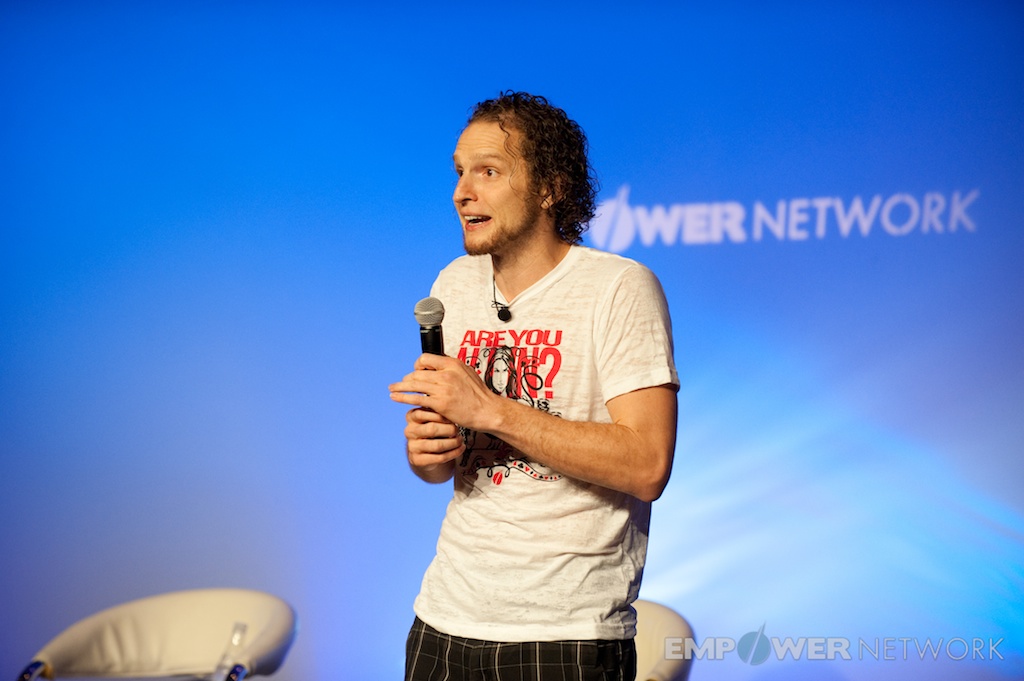
The company launched on Halloween 2011 and signed 8,800 customers in its first month. In its biggest year it did $64 million in sales. I went from a reclined driver’s seat to a stage with my own name on the screen behind me, and I won’t pretend the stage wasn’t intoxicating, because that pretense is exactly how a man ends up back on one.
Those numbers are supposed to be the happy part of the letter, so let me handle them correctly: they are my history, not your projection, and nothing on this page suggests otherwise. They are also the setup for the section I would pay money to skip.
What happened in 2017, told straight
In 2017, Empower Network shut down. The ending was complicated, more complicated than any one-line story I could sell you, and I am not going to hand you a tidy autopsy nine years later. Here is the part I am sure of: the promises around the product had grown louder than the product, and I never want to build that way again.
So when you notice this page contains no income promises, not one, not even an implied one, understand that the absence is not caution. It is the design. The machine speaks for itself this time.
Why I spent 2026 bringing it back
Because one detail never stopped nagging at me through nine quiet years: beginners were getting read in their first week. That fact was true from the first month to the last, and it deserved a second life.
So in 2026 I brought the machine back. The network is running, 3,240 member blogs from the 2011–2017 archive are restored and live on it, the library reaches back to 2011, and the training holds up, because writing that gets read and lists you own never went out of style.
The rest of this letter tells you what the machine does, what it costs, and how to decide. It may be the plainest sales letter you have read in years. That is a choice, and it is the whole point.
You already know the exact sound a blog makes when nobody reads it
You have probably run the experiment. Most capable people have.
You set up the blog, or the newsletter, or the channel. You wrote the first three posts, and they were good, because you are good at what you do. Then one Tuesday night you opened the analytics. Four visits. One of them was your own phone.
Nobody quits publishing because writing is hard. You quit because silence is hard. You can push through a difficult draft in an evening. Pushing through week nine of documented proof that nobody is listening is a different kind of weight, and it beats almost everyone who carries it alone. I carried it in a parked van, so this is not theory to me.
So you go where the readers already are, and you meet the second failure. The platforms that hand you an audience keep the ownership papers. You spend two years building a following, the rules change on a Tuesday, and your reach is gone by Thursday. The audience you assembled turns out to have been rented.
Those are the only two ways this fails: a blog you own that nobody reads, or readers you reach but will never own. The Blogging System exists to refuse both at the same time.

“I am a hairstylist in Tampa, Florida… until joining Empower Network I had never blogged before, and certainly knew nothing about SEO or internet marketing, because I’m a hair stylist! The blogging platform alone is worth far more than its price. I am hooked on blogging and seeing my articles showing up sometimes as the top result on the first page of Google within a day or so.”
Results are not typical. This is one member’s experience of the original 2013 platform, written at the time and reproduced unedited. Most members do not reach the first page of Google for anything, in a day or ever, and nothing here is a promise that you will. Search results depend on your topic, your competition, and your writing. See the income disclaimer.
What changes when your first post lands on a domain with fifteen years of history
Here is the mechanism with no fog on it.
Your blog goes live at empowernetwork.com/you. Not on a fresh domain with a week of history. Inside the restored network: 3,240 member blogs, the course library, and an archive that has been publishing since 2011. Readers already move through this place, from the archive to the courses to the member blogs, and internal links put your posts on paths people actually walk. Search engines meet your writing on an established domain instead of a newborn one. Your first post does not go out to an audience of zero, because the audience was here before you were.
Two things you are owed in plain words about that number. Nearly all of those 3,240 blogs are restored from the original 2011–2017 company, not people publishing today; the 2026 roster is small and new, and you can go count it yourself on the network page before you decide anything. What they are is fifteen years of real indexed pages on a domain search engines already know, and internal links pointing at whatever gets published next. That is a head start, not a guarantee. It puts your writing in front of people. Whether they stay is decided by the writing, which is exactly how it should be.
Then the second half of the mechanism, and to me the more important half. Every post on your blog has reader capture built in. When someone subscribes, that name goes on your list. Not a follower count that evaporates when an algorithm changes its mood. Your list. Exportable any day, for any reason, including the day you decide to leave. That promise lives in the written terms, not just in this letter, because I have watched too many people build on land they did not own.
What is sitting behind the login the day you join
- Your address on the network: empowernetwork.com/you. Hosting, theme, speed, and search structure are handled before you arrive. You write. The plumbing is my problem, permanently.
- The placement effect. Why the same post behaves differently inside a 3,240-blog network than on a day-old domain, and the three specific places your earliest readers actually come from. You will see it in your own stats, not in my adjectives.
- Reader capture wired into every post, feeding a subscriber list you can export any day, for any reason, forever. The word “forever” is in the written terms. Read them before you pay; I want you to.
- A starter draft already waiting in your dashboard. Your first act as a publisher is finishing a post, not staring at a blank page deciding who you are.
- A weekly live call with me, built around what members actually published that week. Bring a post that fell flat and leave knowing precisely why it fell flat.
- The call archive, yours. 256 original recordings — every Inner Circle call, the Empower Hours, the interviews — playable and downloadable the whole time you’re a member. The transcripts are free for everyone to read; the recordings ride with the blog.
- The discipline: one honest post a day. It sounds too small to be the whole engine. It is the whole engine. It was the whole engine in 2011, and it is the one thing most people have never genuinely attempted for thirty consecutive days.
The real price, which is not the $25
The money is the small part, so let me name the true cost first.
This will cost you the daily post. Twenty to forty minutes on the days it flows, longer on the days it fights you, and the days it fights you are the ones that count. It will cost you the comfortable habit of consuming other people’s work and calling it research. The network hands you readers. Nobody can hand them a post except you.
If that paragraph made something in you sit up rather than shrink back, keep reading. If it made you tired, close this page with my respect. This is a discipline dressed as a product, and it should be sold as exactly that.
Sixty days from now, if you actually do this
Here is the only future I am willing to describe, and notice what is missing from it.
It is a weekday morning, sixty days in. The coffee is going cold beside the keyboard because the post took twenty extra minutes, and you let it, because it was getting somewhere true. You press publish. By lunch there is a reply in your notifications from a reader whose name you now recognize, three sentences telling you yesterday’s post described their situation exactly.
Behind that post stand sixty others with your name on them, a body of work that did not exist two months ago, sitting on a network where people walk past it daily. And in your dashboard there is an export button for your subscriber list that you have never needed to press. You checked that it works. It works. That quiet fact changes how it feels to write here, the way a fire exit changes how it feels to sit in a theater.
No income appears anywhere in that picture. That is not modesty. That is the one picture I can put in writing and stand behind completely.
$197 a year or $25 a month: decide once, or decide twelve times
Two doors, same room.
Monthly is $25, cancel anytime from your own dashboard without talking anyone out of it. Take it if you are testing whether the network is what this letter says it is. Thirty days is enough to know.
Annual is $197, which works out to about four months free. Take it if you have already decided to become a person who publishes, because a decision made once is a different instrument than a decision renewed twelve times. The writer who has committed to a year writes differently in month three than the writer who is still voting on it every thirty days. You are not buying a discount. You are buying the end of the deliberation.
For scale: assemble this yourself and you would pay for hosting on its own bill every month, then a list tool that raises its price as your subscribers grow, and no amount of money would put you on a weekly live call with the person who built the network. $197 is less than most people spend annually on tools for a blog nobody reads.

Thirty days, every dollar, and a door built into the wall
Thirty days, full refund, no questions asked. If the Blogging System is not what this letter says it is, one email returns every dollar, and everything you wrote leaves with you.
And after thirty days, the exit stays honest. Cancel whenever you want. Export your posts and your subscriber list and go. The old company made leaving feel like defecting. This one builds the door into the wall on purpose, because the only members worth having are the ones who stay for a reason.
Eight fair questions for a man asking you to trust him twice
Is this an income opportunity?
No. It is a blogging platform and a publishing discipline. Some members write about business, and some use their blogs to sell what they already sell, and whether that works for them depends on their offer and their writing. Nobody honest can promise you a result, and I have specific, expensive reasons for refusing to. The formal version of this answer is here: income disclaimer.
What happened to Empower Network?
I founded it in 2011. It grew to 368,000 customers and did $64 million in its biggest year, and in 2017 it shut down. The ending was complicated and I won't pretend to hand you a clean autopsy. In 2026 I rebuilt the part that was always real, the publishing network, and this time the promises stay small on purpose. You are reading the proof of that right now, in the form of a sales letter with no income claims on it.
Why would anyone trust it a second time?
Don’t trust it on my word; my word has a documented dent in it. Trust the structure instead: a flat price on a public page, a thirty-day refund, no income claims anywhere, and your content and your list exportable the day you decide I am wrong. Every one of those is a thing the old company did not have. I cannot undo 2017. I can build the version where you never have to take my word for anything.
Do I need to be a writer?
You need to be honest for one post a day, which is a lower bar and a much rarer act. Two hundred true words about what you did, learned, or noticed will beat a thousand polished words about nothing, every time, with real readers. Your first post is already half written in your dashboard, and the weekly call exists partly so you can watch working posts get built in front of you.
How much time does this take?
One post a day, and a post is allowed to be short. Once you stop performing and start reporting, a daily post fits inside a lunch break. Setup takes minutes, because the hosting, theme, and structure are finished before you arrive.
Where do the readers actually come from?
Three places: people already moving through the network and its archive, internal links between member blogs, and search finding your posts on an established domain over time. That is a genuine head start and I will not inflate it past the truth: the network brings the first readers, and your writing decides whether they stay.
What happens if I quit?
You cancel in your dashboard, export your posts and your subscriber list, and leave with everything you built. Inside the first thirty days, you also get every dollar back. The exit is part of the product, not a loophole in it.
I already use the free material. Why pay?
The free tier is the Daily Shortcut and the transcripts — read and listen to the free show without a card. Inner Circle, Empower Hour, and interview audio come with this subscription. The Blogging System is the same network from the writer’s side, with your name on one of the doors.
Do this tonight
Here’s the thing. You do not need more information, and you know it. You have wanted to publish for years while the reasonable objections took turns at the microphone, and the objections are all answered above, in writing, next to a refund policy.
So make it physical. Choose the year. Open your dashboard. Find the starter draft sitting there with your name on it and finish it before you sleep tonight, two hundred honest words about something you actually know. Press publish on a network where somebody will read them.
Then do it again tomorrow. That is the whole system. It always was.
In Prosperity,
David Wood
P.S. If you keep one number from this letter, keep thirty. Thirty days with every dollar refundable, one post a day while you decide, and your own analytics open when you judge it. Publish daily for those thirty days and the decision will make itself in either direction. That is the fairest test I know how to offer you.
P.P.S. There is no countdown timer on this page, and nothing expires at midnight. I sold urgency for a living once, and once was enough. So here is the covenant, in writing: no countdowns, no closing-soon theater, not now, not ever. The price will be the same tomorrow and it will be the same in March. What will not be the same is your archive. Waiting does not cost you money here; it costs you the posts that won’t exist, and a body of work is the one thing nobody can hand you later.
The new Kalatu theme library
When the company went dark the blog designs went with it, including the ones people had spent two years building an audience on. They are back as the new Kalatu library: modernized and improved versions of the most successful designs the network ever ran, rebuilt from the original stylesheets and carrying new names. The design David Wood’s own blog ran is here. So are the ones whole teams built their brands on.
All 18 finished designs are included in the subscription. There is no theme store and nothing to buy on top of it. You can change your mind as often as you like: switching a design takes a second and does not touch a single post, comment or subscriber. The rest of the library is still in restoration and joins as each design is finished.
-

Broadside
Since 2014
For offer-first promoters: one big creative banner, then the author, then the blog. Built for people who lead with a deal or a campaign and want the top of the page to act like a poster on a wall.
-

Quill
Since 2014
For long-form writers who want the words unchallenged. Centred white well, no sidebar, strong headings — for people whose product is the essay, the letter, or the book chapter, not a widget grid.
-

Marquee
Since 2014
For personal brands that lead with a face and an opt-in. Photo hero, card posts, and a clear capture path — for coaches who want every visitor to know who you are and how to get the free thing.
-

Redline
Since 2014
For authority coaches who want red-and-navy seriousness. Portrait hero, firm CTAs, numbered posts — for people who sell expertise and want the design to say "I mean business" before the first sentence.
-

Get Money
Since 2014
For coaches and offer owners who want a clean sales blog: white space, strong headlines, and CTAs that read "buy" without looking spammy. Built for people who publish to convert, not just to journal.
-

Glint
Since 2014
For operators who want fast, clean, and credible. Near-black nav, teal links, simple post rows — for people who would rather ship content than fiddle with chrome, and whose audience trusts clarity.
-

Stage
Since 2014
For product-minded marketers who want every post to feel displayed. Big title band, three-up cards — for people showcasing offers, results, or a product line without a heavy sales letter on every page.
-

Grove
Since 2014
For practical business builders who want trust over flash: olive, lime, and a clear promo banner. Best when your reader wants steady progress and a blog that looks like a real company, not a hype page.
-

Roam
Since 2014
For travel, freedom, and "location independent" voices. Gold on plum, photo-first, slow scroll — for people selling a life, not a widget, and who want readers to feel the journey before the pitch.
-

Flex Bright
Since 2014
For bright, modern personal brands who sell lifestyle and possibility. Full-bleed photo hero, cyan energy, and a sticky nav — for creators who want the blog to feel like a product launch every day.
-

Magazine
Since 2014
For publishers who think in issues and features. Serif masthead, featured slide, editorial list — for people who want readers to settle in for content, then meet the free video and the list when they are ready.
-

Red Type
Since 2014
For loud voices and big claims that still need taste. Crimson bar, huge tracked type, masonry cards — for writers who want the design to match a strong point of view, not a quiet diary.
-

Beacon
Since 2014
For funnel builders, not diary writers. Long-scroll bands, squeeze and thank-you pages — for people whose blog is really a path into an offer, and who want the page to walk the reader to the form.
-

Prosperity
Since 2013
For people who want a polished corporate EN feel: navy, teal, and a proper company header. Suits team pages, announcement blogs, and anyone positioning as the network itself rather than a lone operator.
-

Empower Network
Since 2011
For leaders who want the original company authority — the look that said "this is the real Empower Network." Ideal if your audience already knows the brand and you want nostalgia and credibility in the same frame.
-

Dream In Infrared
Since 2008
For storytellers and artists who want a distinctive, old-school web personality. Dark filigree and a literary column — for people who care more about voice and atmosphere than a standard funnel template.
-
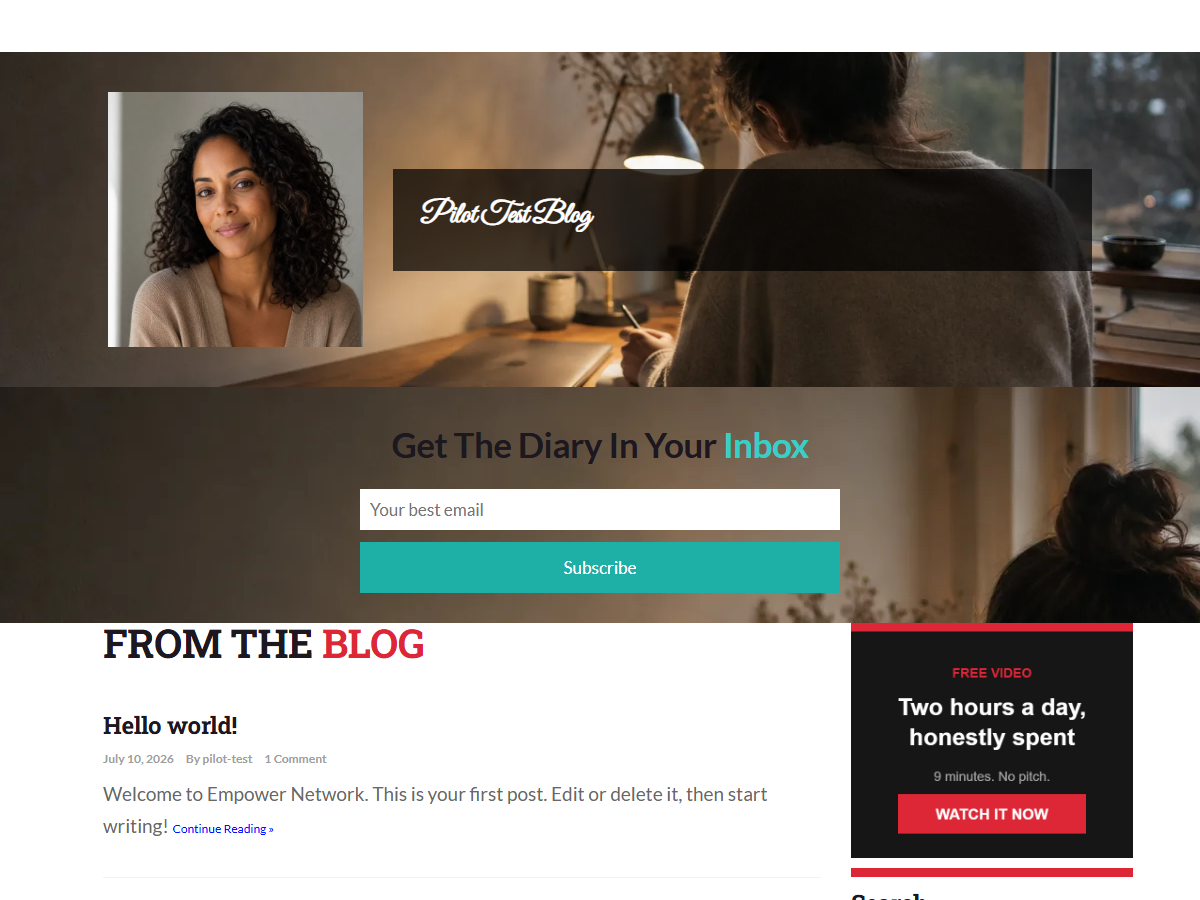
Persona
Since 2014
For face-forward personal brands: portrait next to the banner, grey opt-in strip, big thumbnails. Built for people whose main asset is them — the photo and the name do half the selling.
-
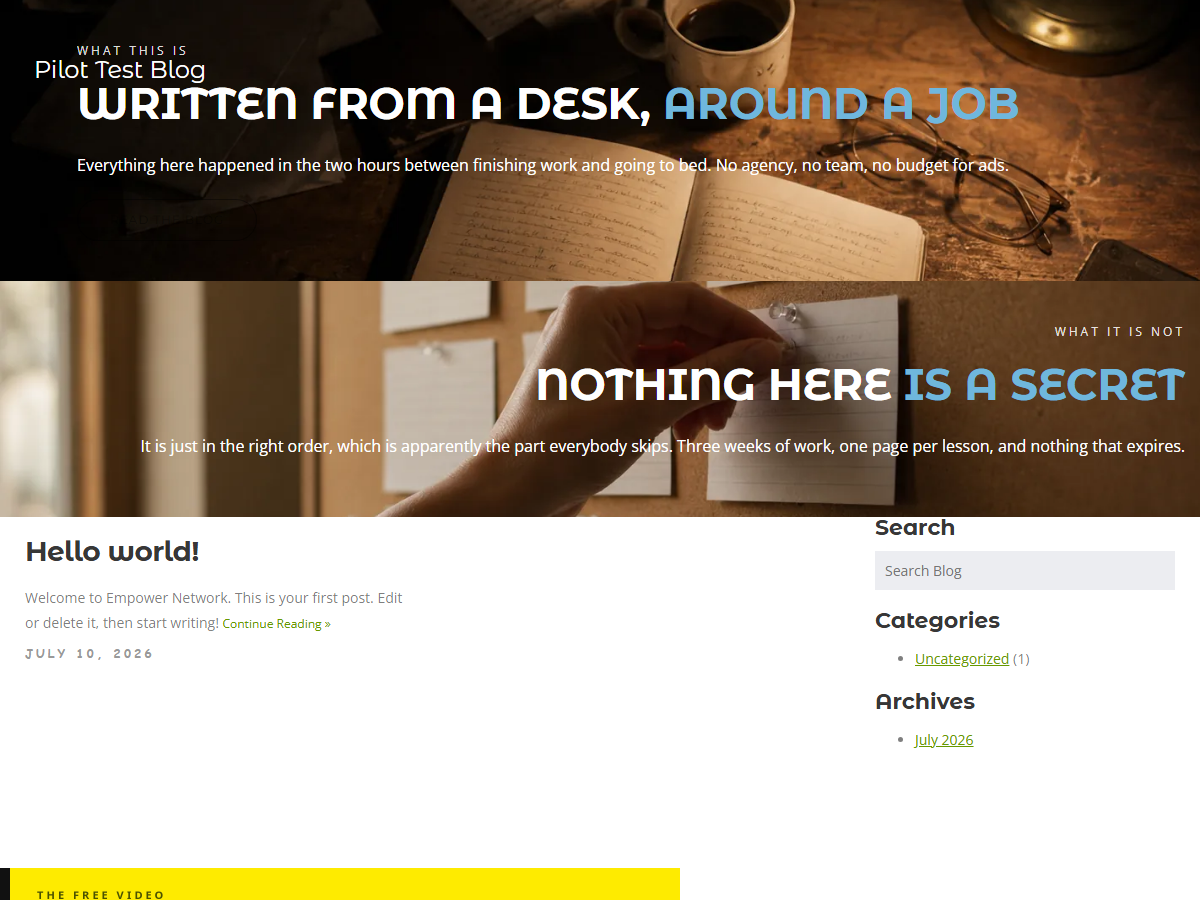
Purpose
Since 2014
White sticky nav over a full-bleed photo slideshow, alternating white and photo bands, outline pill buttons, green link accent, yellow CTA, Montserrat Alternates headings.
These designs are from 2011 to 2016 and they keep that era’s look on purpose — that is most of the point of restoring them rather than replacing them. Under the surface each one is rebuilt to run on today’s WordPress. A few of the original typefaces have since been withdrawn by the foundries that made them; where that happened the closest open equivalent stands in. The screenshots above are real pages rendered with each design, not mock-ups.