Easter Holiday – The Birth of Christianity & the Sacrificial Lamb

Restored from the Empower Network archive (2011–2017), lightly edited to meet our current advertising standards. Views are the original author’s.
The Commercialization of the Easter Holiday, The Birth of Christianity and the Sacrificial Lamb
Easter Holiday – The Commercialization of One of the Biggest Festivals of the Modern Christian Church.
As we all know, the Easter Holiday is one of the most celebrated holidays worldwide and one of the biggest festivals of the modern Christian church. And in just the last half century, it has become well known as the commercialization of the Easter Holiday by the corporate world to boost their profits. Easter Holiday Weekend is the 3rd largest grossing sales period behind the Christmas holiday and Thanksgiving which has “Black Friday”.
The Celebration of Easter Holiday and Corporate Infiltration of the Easter Holiday
The corporate and business world sees the Easter Holiday differently – as a game of monopoly – by trying to see who can make the most profit. You can go into some stores as early as 2 months before Easter and you’ll find all sorts of Easter Holiday goodies all packaged in Easter bunny shapes and forms. The shiny colored eggs always come later only because the eggs will become rotten sitting on the shelves too long.
That’s right, even the pagans got into the act of celebrating the Easter Holiday event which is somehow the reason that eggs and rabbits intertwined with the sacred holiday of Christianity now called Easter. Eggs and Rabbits are widely-used pagan symbols of fertility.
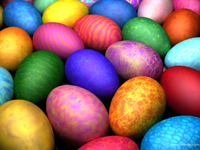 By coloring the Easter Eggs and putting them in fancy packaging kind of took away the anger of the Christians celebrating Christ. This was a good way of seeing Easter eggs or other candies and treats, as symbols of joy and celebration (as they were forbidden during the fast of Lent) as well as being a “taste” of new life and resurrection that they have in Jesus Christ.
Also the custom was born to hide brightly colored eggs for children to search and find for excitement and amusement because they were too young to understand the meaning of all this religious morality.
How Easter Holiday, the Birth of Christianity & the Sacrificial Lamb Stimulates the Economy
The Easter Holiday does stimulate the economy though, especial the medicinal world of selling products to ease the body ailments from eating all the sugary and chemically process sweets. Afterwards all the dentists are all booked out from filling cavities and the Gyms are full of people who want to take off the pounds they gained during the holidays. Sad but true!
 During Easter, it is difficult to go out shopping and not find an array of Easter Holiday goods on display from sweets, gift item baskets and greeting cards. Every business want to take part in the Easter Holiday for the profits of Easter
How Easter Holiday, the Birth of Christianity & the Sacrificial Lamb Came About
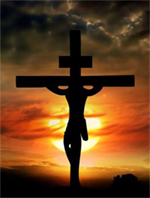
Obviously it is about Jesus Christ, whose sacrificial death is celebrated by Christians around the world on the Easter Holiday Weekend. Easter is the oldest Christian holiday and the most important day of their church year.
All the Christian movable feasts and the entire liturgical year of worship are arranged around Easter. Easter is preceded by the season of Lent, a 40-day period of fasting and repentance culminating in Holy Week, and followed by a 50-day Easter Season that stretches from Easter to Pentecost.
 The name Easter is derived from the word Eostre. Eostre was the ancient Greek goddess of spring. Thus, ancient Greeks held pagan festivals to welcome Eostre and herald the onset of the Spring season.
Some people even believe that Easter Holiday is related to the Hebrew celebration, the Jewish Passover. Passover is celebrated to mark the freedom of the Israelites from bondage and slavery after 300 years in Egypt.
The Easter Holiday is a festival that denotes life, rejuvenation, renewal, rebirth and restoration of all beings on Earth as well as spiritual awareness of the gift of eternal life given to us by our creator.
Now, for Some Fun Facts About the Easter Holiday, The Birth of Christianity & the Sacrificial Lamb
For instance, did you know that each year over 90 million chocolate Easter bunnies are made for the Easter holidays?
Each day, over five million marshmallow chicks and bunnies are produced in preparation for Easter.
16 billion jelly beans are made for Easter (that’s enough to completely fill an 89 feet high and 60 feet wide plastic Easter egg – about the height of a nine-story office building!)

75 percent of kids are willing to do extra chores for extra Easter candy (what? Are we supposed to give them sweets to rot their teeth for doing chores? (lol).
88 percent of adults carry on the Easter tradition of creating Easter baskets for their kids and 90 percent of adults hope for their own treat from the Easter Bunny. Who wouldn’t want to enjoy eating chocolate?
When taking a bite into a chocolate bunny, 76% of Americans prefer to bite off the ears first. 5% eat the feet first and 4% eat the tail first.
The first chocolate eggs were made in Germany in the 19th century and remain one of the most popular Easter candies today.
The exchange of eggs for Easter dates back to a springtime custom older than Easter itself in which eggs were given as a symbol of rebirth in many cultures.
There is a lot more to “Easter Holiday” than what is written here. More information of course can be found by googling the search-term keyword “Easter Holiday” which has an average of 260,000 searches per month. That is why I chose it for this article title hoping that many of these people will find this article and see my blog post. I earn residual income from blogging and so can you. to find out how you can make money blogging.
====================================================
====================================================
====================================================